
Oracle AP automation
Procurement and AP automation, in sync with your Oracle ERP
A single module live in as little as a week. The full source-to-pay suite in 8 to 16 weeks.
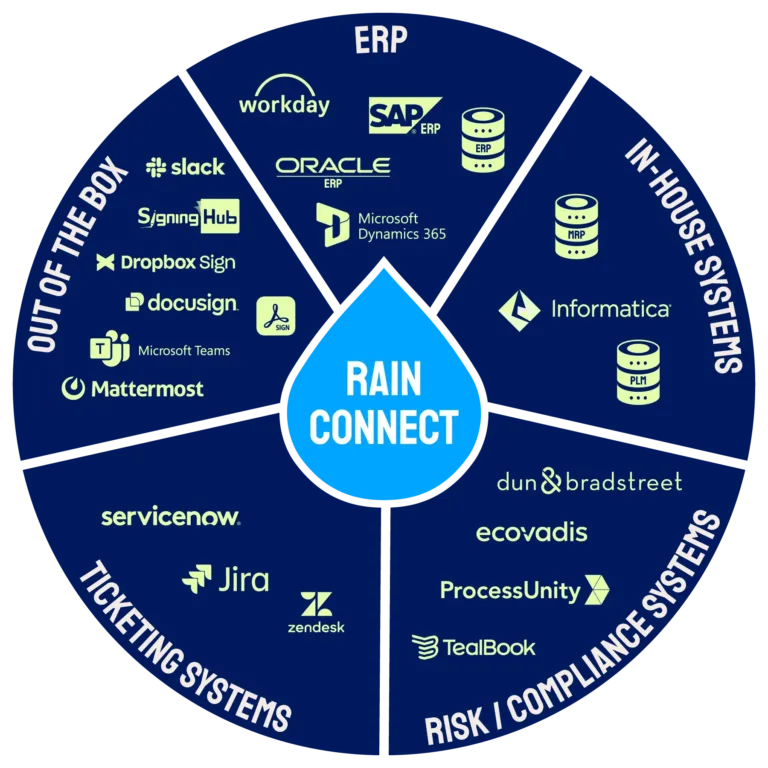
Raindrop Systems connects to Oracle Fusion, Oracle E-Business Suite, and JD Edwards EnterpriseOne, the on-premise installs still common in manufacturing and distribution. Your Oracle ERP stays the system of record: Raindrop reads from it and writes back to it.
If invoice capture is all you need, Oracle’s own AP features or an AP add-on may be the right call. If purchase requests, sourcing, and contracts still live outside Oracle, a source-to-pay suite closes that gap on one platform.
Search for Oracle AP automation and you’ll find three different answers: what Oracle builds into its ERPs, a long list of AP add-ons, and full source-to-pay suites like Raindrop. Which Oracle ERP you run changes the answer, because Fusion Cloud ERP, E-Business Suite, and JD Edwards each handle AP differently. This page lays out what each option covers, so you can pick the smallest thing that fixes your problem.
Three Ways to Automate AP on Oracle
Oracle's own AP features
All three Oracle ERPs match invoices to purchase orders and receipts and route approvals. Fusion Cloud ERP also reads emailed invoices and, Oracle says, now runs a Payables Agent.
Best when AP is the whole problem and your purchase orders already live in Oracle.
An AP add-on
Stampli, Tipalti, Basware, Esker, and Medius each publish Oracle integrations, and their coverage differs: some name Fusion only, others add JD Edwards or E-Business Suite.
Best when you want stronger capture, approvals, or payments without changing how you buy.
A source-to-pay suite
Raindrop covers intake, sourcing, contracts, purchasing, AP automation, and payments on one platform connected to Oracle Fusion, E-Business Suite, or JD Edwards EnterpriseOne.
Best when late invoices start upstream: requests outside any system, contracts nobody can find at invoice time.
What Oracle Already Does for AP
Start here, because it may be enough. In Fusion Cloud ERP, Payables can match an invoice to a purchase order, a receipt, or consumption advice, and Fusion Procurement sets a 2-way, 3-way, or 4-way match level on each purchase order line. Invoices outside your rules go on hold, and a hold can stop payment until someone fixes the exception. The invoice approval workflow decides whether an invoice needs approval and routes it, and payment process requests pay what’s ready.
For capture, Intelligent Document Recognition reads invoices that arrive by email. In release 26B, Oracle made its Payables Agent generally available: Oracle says it adds anomaly checks like duplicate detection and routes invoices for approval, at no additional subscription cost. Availability depends on your Oracle Cloud region and Oracle-managed prerequisites.
E-Business Suite 12.2 runs the same checks the classic way: Invoice Validation with 2-way, 3-way, and 4-way match controls and holds, approvals through Oracle Approvals Management, and pay runs from payment process request templates. For capture, Oracle sells WebCenter Forms Recognition as a separate product.
JD Edwards EnterpriseOne 9.2 runs Voucher Match Automation, 2-way and 3-way matches in batch from invoice data loaded into its tables, and Voucher Approval Workflow holds vouchers over a threshold for an approver. Oracle’s JD Edwards AP documentation names no invoice capture feature.
Which Oracle, in Oracle’s words
Oracle Fusion Cloud ERP
Oracle’s cloud ERP suite, updated every quarter. Native AP: Payables, Intelligent Document Recognition, and the Payables Agent.
Oracle E-Business Suite
The long-running suite Oracle says it still invests in, on premises or on Oracle Cloud Infrastructure. Release line 12.2, with Premier Support through at least 2037.
JD Edwards EnterpriseOne
Release 9.2, with new features delivered as updates instead of upgrades. On premises or on Oracle Cloud Infrastructure, with Premier Support through at least 2037.
AP Automation Options for Oracle, Side by Side
What each option says about itself: the Oracle products it names, how it connects, and what pricing it publishes. Coverage varies by Oracle ERP and release, so confirm yours in a demo.
| Option | Oracle products named | How it connects | Published pricing |
|---|---|---|---|
| Fusion Cloud ERP (built in) | Fusion Cloud ERP | Payables matching to PO, receipt, or consumption advice; holds; approval workflow; IDR capture and, from release 26B, the Payables Agent | Part of Fusion; Oracle says the Payables Agent adds no subscription cost |
| E-Business Suite (built in) | E-Business Suite 12.2 | Invoice Validation with 2-, 3-, and 4-way match controls; approvals through Oracle Approvals Management; capture through Oracle’s separate WebCenter imaging | Part of E-Business Suite; WebCenter imaging is a separate Oracle product |
| JD Edwards (built in) | JD Edwards EnterpriseOne 9.2 | Voucher Match Automation (2-way and 3-way, in batch); Voucher Approval Workflow; Orchestrator invoice entry | Part of JD Edwards |
| Stampli | Oracle Fusion; JD Edwards EnterpriseOne | Fusion: direct connection on Oracle REST APIs and BI Publisher. JD Edwards: file integration for coding and payment data | By quote |
| Tipalti | Oracle Fusion | Syncs suppliers, POs, goods receipts, bills, payments, and vendor credits at the GL level | AP plans from $99/month plus transaction fees |
| Basware | Fusion Cloud ERP; a customer case across E-Business Suite and Fusion | Fusion: e-invoice receiving recipe on Oracle Integration Cloud, on Oracle Cloud Marketplace in Basware’s words. E-Business Suite: a customer case, connection method not stated | By quote |
| Esker | E-Business Suite, JD Edwards EnterpriseOne, NetSuite, and Oracle cloud ERP | Pre-built integration for on-premises or cloud Oracle; Oracle PartnerNetwork member, in Esker’s words | None published |
| Medius | Fusion Cloud ERP; JD Edwards EnterpriseOne | Fusion: pre-packaged, fully managed connector with two-way sync. JD Edwards: pre-packaged integration through partner Circular Edge | By quote |
| Raindrop Systems | Oracle Fusion, E-Business Suite, and JD Edwards EnterpriseOne | RainConnect, which supports two-way sync for approvals, invoice status, and supplier updates across the platform; confirm your Oracle fields in a demo. Your Oracle ERP stays system of record | Not published; request a demo |
Fusion Cloud ERP (built in)
Oracle products named: Fusion Cloud ERP
How it connects: Payables matching to PO, receipt, or consumption advice; holds; approval workflow; IDR capture and, from release 26B, the Payables Agent
Published pricing: Part of Fusion; Oracle says the Payables Agent adds no subscription cost
E-Business Suite (built in)
Oracle products named: E-Business Suite 12.2
How it connects: Invoice Validation with 2-, 3-, and 4-way match controls; approvals through Oracle Approvals Management; capture through Oracle’s separate WebCenter imaging
Published pricing: Part of E-Business Suite; WebCenter imaging is a separate Oracle product
JD Edwards (built in)
Oracle products named: JD Edwards EnterpriseOne 9.2
How it connects: Voucher Match Automation (2-way and 3-way, in batch); Voucher Approval Workflow; Orchestrator invoice entry
Published pricing: Part of JD Edwards
Stampli
Oracle products named: Oracle Fusion; JD Edwards EnterpriseOne
How it connects: Fusion: direct connection on Oracle REST APIs and BI Publisher. JD Edwards: file integration for coding and payment data
Published pricing: By quote
Tipalti
Oracle products named: Oracle Fusion
How it connects: Syncs suppliers, POs, goods receipts, bills, payments, and vendor credits at the GL level
Published pricing: AP plans from $99/month plus transaction fees
Basware
Oracle products named: Fusion Cloud ERP; a customer case across E-Business Suite and Fusion
How it connects: Fusion: e-invoice receiving recipe on Oracle Integration Cloud, on Oracle Cloud Marketplace in Basware’s words. E-Business Suite: a customer case, connection method not stated
Published pricing: By quote
Esker
Oracle products named: E-Business Suite, JD Edwards EnterpriseOne, NetSuite, and Oracle cloud ERP
How it connects: Pre-built integration for on-premises or cloud Oracle; Oracle PartnerNetwork member, in Esker’s words
Published pricing: None published
Medius
Oracle products named: Fusion Cloud ERP; JD Edwards EnterpriseOne
How it connects: Fusion: pre-packaged, fully managed connector with two-way sync. JD Edwards: pre-packaged integration through partner Circular Edge
Published pricing: By quote
Raindrop Systems
Oracle products named: Oracle Fusion, E-Business Suite, and JD Edwards EnterpriseOne
How it connects: RainConnect, which supports two-way sync for approvals, invoice status, and supplier updates across the platform; confirm your Oracle fields in a demo. Your Oracle ERP stays system of record
Published pricing: Not published; request a demo
Oracle’s details come from Oracle’s own pages, and each vendor’s from its own. Product coverage and partner claims are each vendor’s wording, so confirm your Oracle ERP and release, and who supports the connection.
How Raindrop Connects to Oracle Fusion and JD Edwards
Raindrop’s integration layer, RainConnect, is built into the core platform from day one rather than bolted on afterward.
On Oracle, Raindrop’s connections cover Oracle’s current cloud line, Oracle Fusion, plus E-Business Suite and JD Edwards EnterpriseOne, whether you run the cloud line or a long-standing on-premise instance. Across the platform, RainConnect supports two-way sync for approvals, invoice status, and supplier updates, in real time where a workflow needs it and on a schedule where it doesn’t, chosen per workflow. Your Oracle ERP stays the system of record; Raindrop reads from it and writes back to it.
Running an Oracle setup not named here? RainConnect’s connector architecture is built to reach systems beyond Raindrop’s published list, so ask what the connection looks like for your release.
Cordis, a medical device maker, built an independent AP operation on JD Edwards EnterpriseOne after separating from Cardinal Health. JDE still holds its purchase orders, receipts, financial records, and payments. Purchase orders and receipts flow from JDE into Raindrop for 2-way and 3-way matching, approved supplier records go to JDE, and approved invoices post back to JDE. Average invoice cycle time fell by more than 75 percent, from about 30 business days to about seven, on roughly 1,000 records a week. Read the Cordis case study.
Underneath, RainConnect runs on Workato, an enterprise-grade integration platform. Oracle, Oracle Fusion, and JD Edwards sit alongside NetSuite, SAP S/4HANA, SAP Ariba, Sage, Microsoft Dynamics 365, and Workday on Raindrop’s list of maintained connections.
Full integration details, including architecture and connector list.
What RainConnect keeps in sync
Both directions, in real time or on a schedule, set per workflow.
- ◆Approvals
- ◆Invoice status
- ◆Supplier updates and deactivations
Your Oracle ERP stays the system of record. We’ll confirm the fields for your Oracle setup in a demo.
How fast Raindrop goes live on Oracle
1 week
Fastest go-live for a single module
AP automation on its own, in as little as a week.
8 to 16 weeks
The full source-to-pay suite
End to end, Raindrop’s own stated range.
Built in
RainConnect is part of the core platform
Built in from day one rather than bolted on.
Your Oracle ERP stays the system of record the whole way through. There’s no rip-and-replace ERP project.
What AP Automation for Oracle Looks Like on Raindrop
Every invoice runs the same loop, whether it starts with a purchase request or lands cold in an inbox.
Intake and capture
A purchase request comes in through Raindrop, gets routed and approved, and becomes a purchase order. Or an invoice arrives with no PO behind it: a utility bill, a subscription renewal, a one-off vendor charge. Either path feeds the same AP process.
Raindrop’s AI reads whatever format the invoice arrives in, whether that’s a PDF, a portal upload, an EDI feed, or a photo of a paper receipt. There’s no OCR template to configure.
Matching and fraud checks
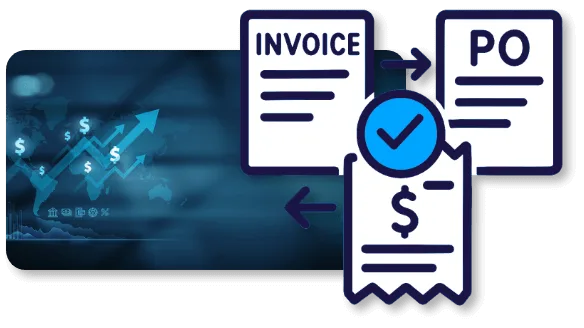
For PO-backed invoices, automated 2-way and 3-way matching reconciles the invoice against the PO and the receipt without someone cross-referencing systems by hand. For non-PO invoices, machine learning auto-codes them using historical patterns and your GL rules.
Before anything gets approved for payment, Raindrop flags duplicate invoice numbers, suspicious payment patterns, and mismatched supplier data. That check happens before the money moves.

Approval routing and payment
Invoices route through your approval rules. Once approved, Raindrop pushes the invoice through to your Oracle ERP for payment or pays it through RainPay, and writes the result back so the ledger matches what actually happened.
Raindrop’s AP Automation module documents this loop in more depth, including how Cordis, a JD Edwards-based global manufacturer, reached 56% touchless processing across three regions. See the AP Automation module for the full picture.
Native, Add-On, or Suite? The Honest Answer for Oracle Shops
When an AP-only tool is enough
If your Oracle AP problem is genuinely just AP (invoices are slow, matching is manual, approvals chase people over email), start with what Oracle includes, then a purpose-built AP add-on if you need more on capture, approvals, or payments. Adding a suite is more than that problem needs.
When a suite pays off
The calculation changes when AP is one symptom of a bigger pattern: purchase requests living in email and spreadsheets, sourcing decisions made without contract terms in view, supplier data duplicated across tools that don’t talk to each other. An AP tool fixes the loudest problem and leaves the rest in place. Raindrop covers intake and orchestration, sourcing, contract lifecycle management, procurement, AP automation, RainPay, and e-invoicing on one platform connected to Oracle Fusion or JD Edwards EnterpriseOne.
Here’s the honest trade-off. A suite is a bigger decision and a slightly bigger first scope than turning on a module. What it buys you is one integration to maintain, one data model instead of copies drifting apart, and a platform that can take on procurement or contract work later without a second vendor evaluation.
Built for the Four Rooms That Have to Agree
An Oracle AP automation decision rarely gets made by one person. Here’s what each side of the table checks.

Controller / CFO
You need the numbers in Oracle to be right as well as fast. Raindrop reads from your Oracle ERP and writes back to it, so close isn’t waiting on a reconciliation between two systems. Fraud checks run before payment. Weighing a move from E-Business Suite to Fusion? Oracle’s Premier Support for 12.2 runs through at least 2037, so the AP decision and the ERP move don’t have to happen together.

CPO / Procurement Operations Manager
Paying invoices faster is only part of the job. Requests, approvals, and supplier data often live outside Oracle entirely. Raindrop puts intake, sourcing, and supplier data on the same platform as AP, so a purchase decision and the invoice it produces stay connected. At Cordis, purchase orders and receipts from JD Edwards feed Raindrop’s matching.

CIO / CTO
RainConnect is a native part of Raindrop, running on Workato, with role-based access controls, secure API communication, and full audit trails. The platform runs on Google Cloud infrastructure. Ask every vendor, us included, which Oracle ERPs and releases its connector supports.

Legal / Compliance
Every action, from invoice approval to payment release, leaves an audit trail. Fraud detection runs before payment, which matters for your control environment.
Why Analysts and Buyers Rate Raindrop
Raindrop is named a Sample Vendor in the 2026 Gartner Hype Cycle for Procurement and Sourcing Solutions, and has been recognized in Gartner Hype Cycles for five consecutive years. See the recognition.
On Gartner Peer Insights, Raindrop is rated 4.3 out of 5 from 23 ratings in the Source-to-Pay Suites market. Read the reviews on Gartner Peer Insights.
Both reflect the platform buyers evaluate regardless of which ERP sits underneath it. For an Oracle shop building a shortlist, that’s third-party evidence next to whatever an AP-only vendor can show you.


The Hackett Group, 2026 Customer Value: AP Automation/Invoice-to-Pay and Source-to-Pay
Frequently Asked Questions
Much of it. Fusion Payables matches invoices to purchase orders and receipts, puts exceptions on hold, routes approvals, and pays through payment process requests. Intelligent Document Recognition reads emailed invoices, and in release 26B Oracle made its Payables Agent generally available. Oracle says the agent carries no additional subscription cost, and that its AI services depend on your cloud region and Oracle-managed prerequisites.
Both match invoices to purchase orders and receipts and route approvals: E-Business Suite through Invoice Validation and Oracle Approvals Management, JD Edwards EnterpriseOne through Voucher Match Automation and Voucher Approval Workflow. For capture, E-Business Suite pairs with Oracle's separate WebCenter imaging. Oracle's JD Edwards AP documentation describes invoice data loaded into batch tables and names no capture feature.
Oracle offers Premier Support for E-Business Suite 12.2 and JD Edwards EnterpriseOne 9.2 through at least 2037, and says it reviews each year whether to extend that by another year. Oracle also reserves the right not to extend it. Fusion Cloud ERP is a cloud service Oracle updates every quarter, so it has no comparable date.
Through RainConnect, Raindrop's built-in integration layer running on Workato. Raindrop's connections cover Oracle Fusion, E-Business Suite, and JD Edwards EnterpriseOne. Across the platform, RainConnect supports two-way sync for approvals, invoice status, and supplier updates, and your Oracle ERP stays the system of record. Tell us which Oracle ERP and release you run, and we'll confirm which fields sync with your setup.
Yes. Raindrop Systems connects to JD Edwards EnterpriseOne. At Cordis, JDE keeps purchase orders, receipts, financial records, and payments, while Raindrop handles invoice intake, matching, coding, and approval routing, and approved invoices post back to JDE. Cordis's average invoice cycle time fell from about 30 business days to about seven.
A single module, including AP automation, can go live in as little as one week. The full source-to-pay suite typically takes 8 to 16 weeks.
Yes. Machine learning auto-codes non-PO invoices, such as subscriptions, services, and one-off purchases, using historical coding patterns and your GL rules instead of routing them to someone's inbox to guess at.
Raindrop Systems fits organizations running Oracle Fusion, E-Business Suite, or JD Edwards EnterpriseOne as the financial system of record, with procurement, sourcing, or supplier management still outside it. If AP is the only problem, Oracle's own AP features or an AP add-on may be enough, and that's a fine answer.
See How Raindrop Connects to Your Oracle Setup
The fastest way to evaluate this is against your own Oracle environment. Request a session and we’ll walk through how AP automation and procurement connect to it.
Keep reading
- ◆Raindrop Integrates Anywhere: the RainConnect architecture and the full ERP connector list.
- ◆Cordis Case Study: how a JD Edwards shop cut invoice cycle time from about 30 business days to about seven.
- ◆AP Automation and Procurement for NetSuite: the same approach for Oracle NetSuite shops.
- ◆AP Automation and Procurement for SAP S/4HANA: the same approach for SAP shops.
- ◆AP Automation for Microsoft Dynamics 365 and Great Plains: the same approach for Dynamics shops.