Understanding Agentic AI and Its Role in Procurement

Our Ten Part Series to Take You through Agentic


Enterprise technology is at a turning point, largely driven by advances in artificial intelligence (AI). Over the last decade, what used to be basic automation tools have now become powerful systems that are capable of analyzing data and generating content; these systems learn and adapt, growing in importance to teams. Each evolution of AI has expanded what an organization can do with it, yet the limitations of AI still remain a consideration.


We've created this Agentic Guide into 10 rainbursts as well as an Agentic Glossary of Terms to help you learn, understand, and navigate your way through the emerging agentic landscape for Procurement and Finance.


Scroll below to get started!
Cover Image agentic ebook

Key Takeaways

  • AI is moving away from providing insight and moving toward planning and acting on necessary tasks. 
  • Agentic AI introduces the potential for autonomous workflows with minimal human interaction.
  • Procurement’s process-driven, cross-system, decision-heavy, complex nature is what makes it uniquely suited to work with agentic AI systems.

Section 1

Agentic AI: The Next Evolution of Artificial Intelligence in Enterprise Software

Agentic ai ebook 01 1024x264

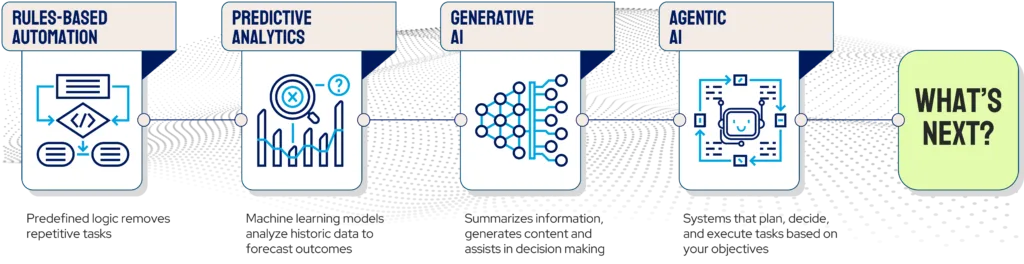
Artificial intelligence has moved quickly from cautious experimentation to everyday business use. What began as rules-based automation evolved into predictive analytics, then generative AI, and now agentic AI - systems that can not only analyze and recommend, but plan, act, and improve over time. This shift matters because most enterprise AI has historically stopped short of execution. It could summarize data, surface trends, or answer questions, but still required humans to decide what came next and initiate the work.

Agentic AI changes that model. By connecting AI models to real systems, workflows, permissions, and business data, organizations can move from insight to action. For procurement, this is especially powerful. Procurement sits at the center of suppliers, contracts, invoices, approvals, sourcing events, risk, and spend decisions. It is data-rich, process-heavy, and full of repeatable decisions that require context. Agentic AI helps turn that complexity into coordinated action while keeping humans in control.


AI is no longer just answering questions. It is starting to take action. See why agentic AI is becoming the next major shift in enterprise software.

Section 2

What to know about Agentic AI

Agentic AI refers to AI systems built around autonomous software agents that can pursue goals, reason through problems, make decisions, and execute tasks across digital systems with limited human oversight. Unlike traditional automation, which follows predefined rules, or generative AI, which creates content based on prompts, agentic AI is designed to work toward outcomes.

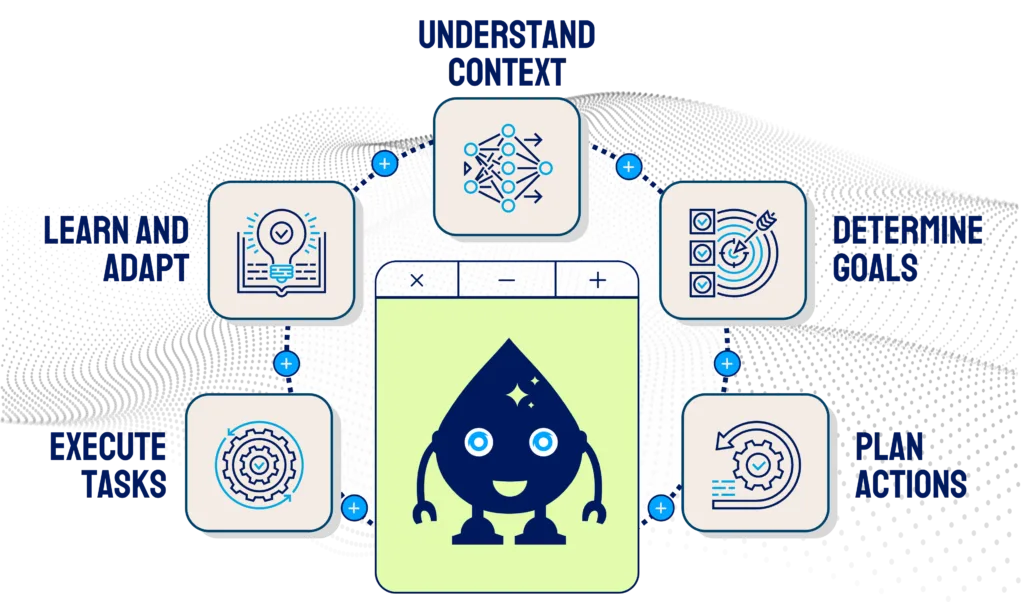
At its core, agentic AI combines three capabilities: autonomy, reasoning, and execution. It can understand context, determine goals, plan actions, execute tasks, and learn from the results. That makes it especially useful in dynamic business environments where conditions change and workflows span multiple systems.

In procurement, this distinction is critical. A traditional automation might route an invoice for approval when it exceeds a threshold. An agentic AI system could detect supplier risk, assess the contract impact, recommend alternatives, and launch the appropriate workflow. It does not simply wait for a trigger; it proactively identifies what needs attention and helps move work forward.


Automation follows instructions. Agentic AI works toward outcomes. Learn the difference — and why it matters for procurement.


Agentic ai ebook 02b 1024x602

Section 3 - The Technology Behind Agentic AI

Section 4 - Why Procurement is Ideal for Agentic AI and the Benefits

Section 5 - Examining Use Cases for AI in Procurement

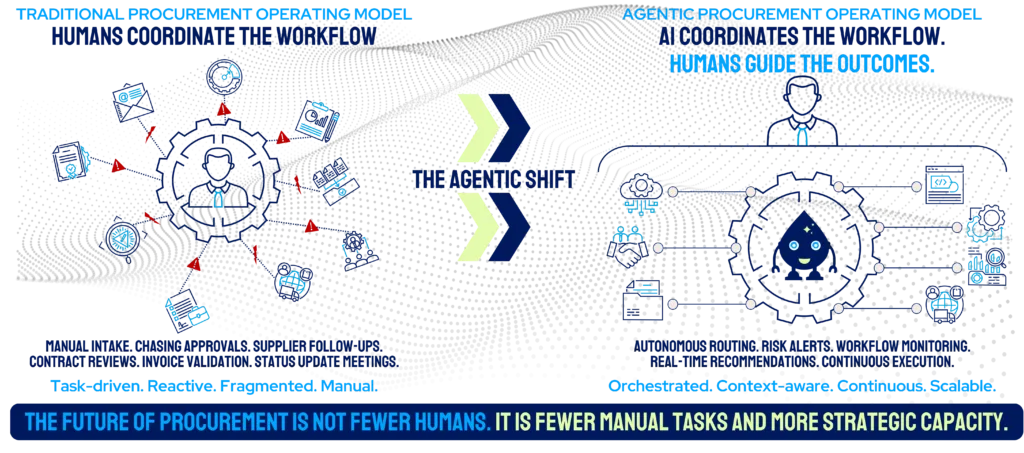
Section 6 - The Operating Model of Agentic Procurement

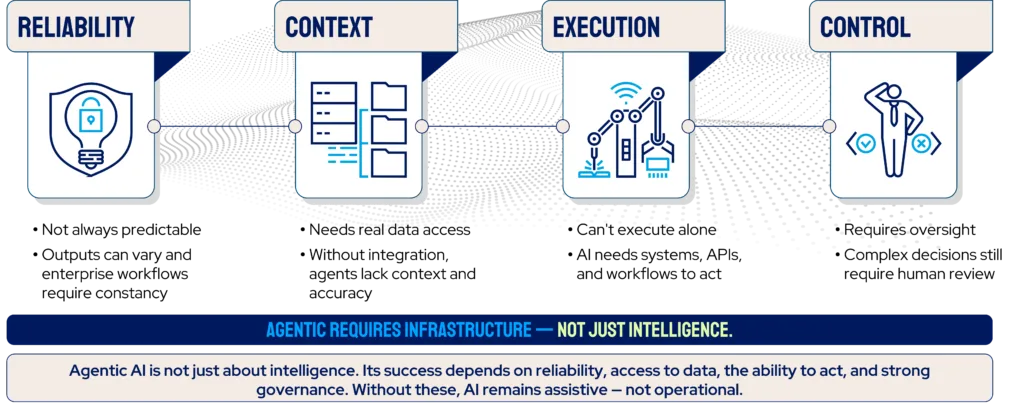
Section 7 - The Architecture Required to Enable Agentic AI

Section 8 - Limitations of Agentic AI and Why we still need humans

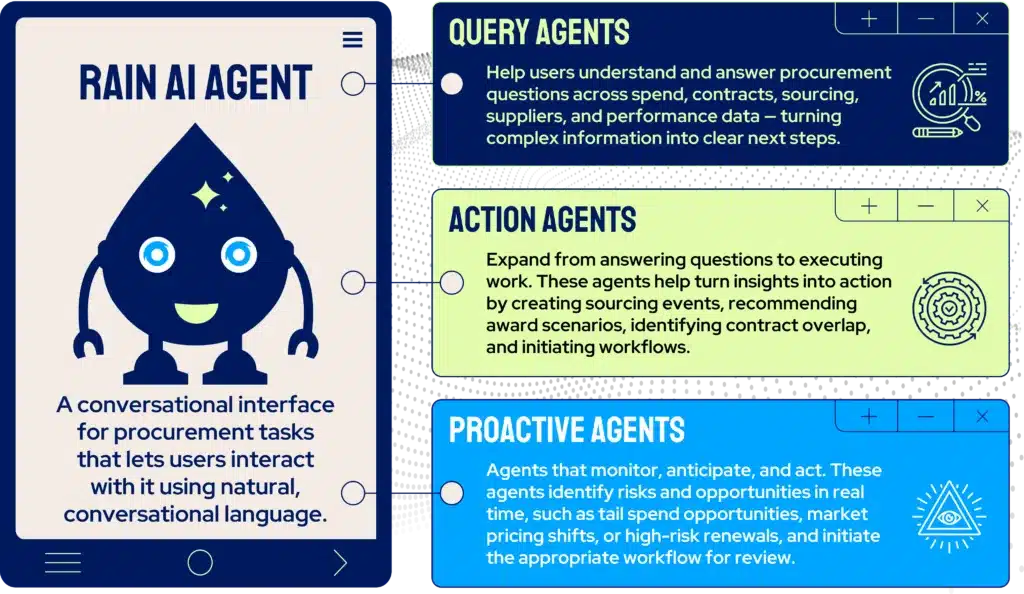
Section 9 - How Raindrop Enables Agentic Procurement

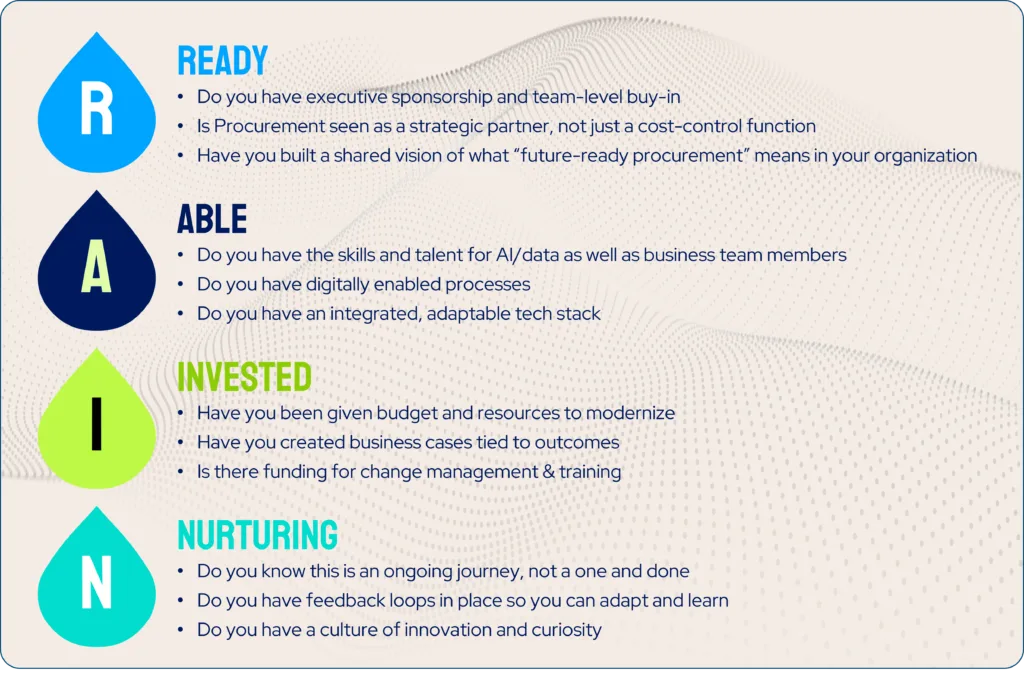
Section 10 - Define your Business's Future in Procurement with Agentic AI


Raindrop period dark blue

FAQ

What is agentic AI in procurement?

Agentic AI in procurement refers to AI systems that can reason, plan, make decisions, and take action across procurement workflows with limited human intervention. Instead of only answering questions or generating content, agentic AI can help move work forward across sourcing, supplier management, contracts, purchasing, invoices, approvals, and analytics.

How is agentic AI different from generative AI?

Generative AI creates content, summaries, responses, and recommendations. Agentic AI goes further by connecting intelligence to systems, data, workflows, and permissions. That means it can help turn an answer into an action, such as routing an approval, flagging a contract risk, initiating a sourcing event, or creating a task for review.

How is agentic AI different from traditional automation?

Traditional automation follows predefined rules: when something happens, the system performs a specific action. Agentic AI is more flexible. It can interpret context, evaluate options, recommend next steps, and act within approved workflows and guardrails. Put simply: automation follows instructions; agentic AI works toward outcomes.

Why is procurement a strong use case for agentic AI?

Procurement is process-heavy, data-rich, and highly cross-functional. Teams work across suppliers, contracts, purchase requests, sourcing events, invoices, budgets, approvals, and business stakeholders. Because so much procurement work depends on context, coordination, and repeatable decision-making, it is well suited for agentic AI.

What can agentic AI help procurement teams do?

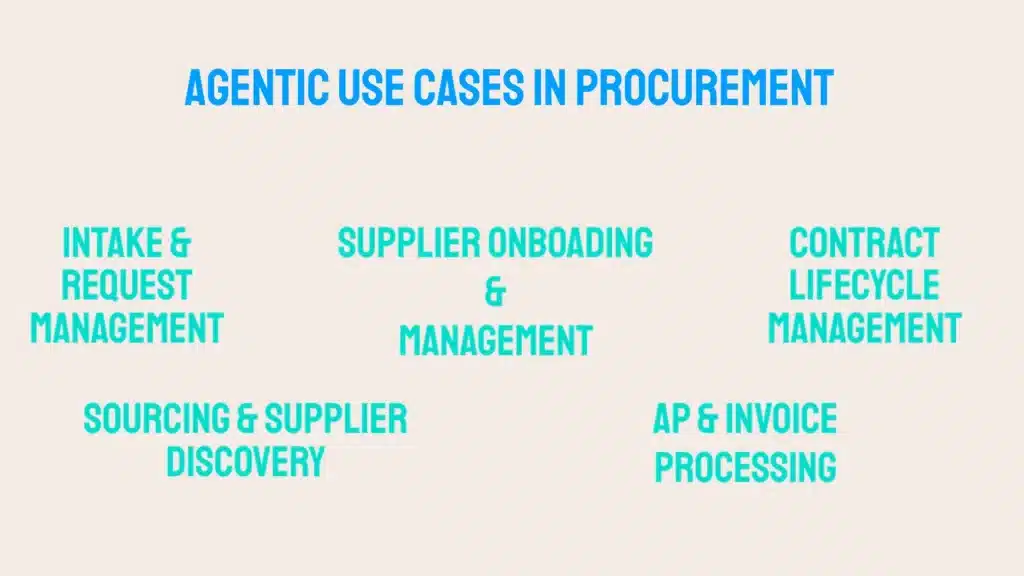
Agentic AI can help procurement teams ask questions in natural language, analyze data across workflows, identify risks and savings opportunities, recommend next steps, and initiate approved actions. Common use cases include intake, supplier onboarding, sourcing support, contract monitoring, invoice validation, approval routing, and spend analysis.

Does agentic AI replace procurement professionals?

No. Agentic AI is not about replacing procurement teams. It is about reducing repetitive manual work so people can focus on higher-value activities such as supplier strategy, negotiation, risk management, business alignment, governance, and exception handling. Humans still provide judgment, oversight, and control.

What are Query Agents, Action Agents, and Proactive Agents?

Query Agents help users answer questions and understand procurement data. Action Agents move beyond answers by helping execute work, such as creating sourcing events, initiating workflows, or identifying contract overlap. Proactive Agents monitor activity in real time and surface risks or opportunities before users ask.

What technology is needed for agentic AI to work?

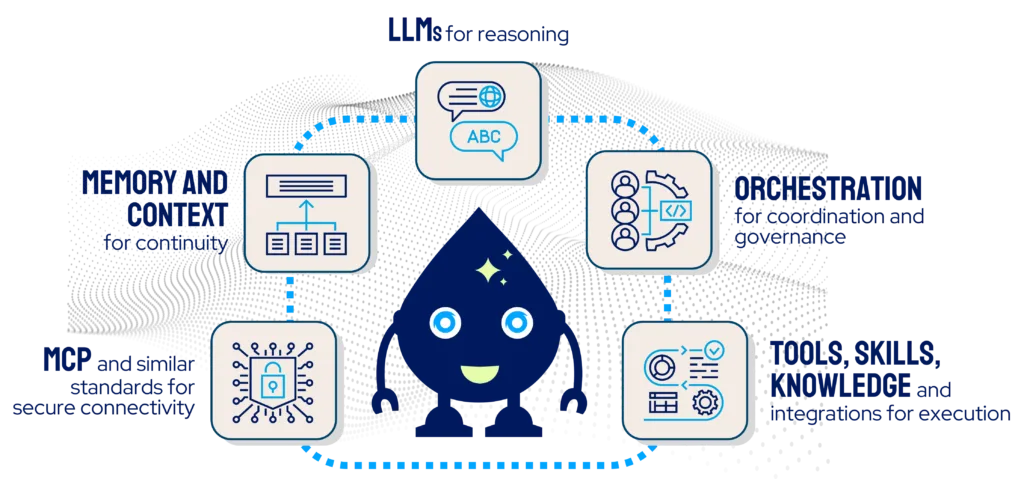
Agentic AI needs more than a large language model. It requires unified procurement data, workflow orchestration, system integrations, permissions, governance, and security controls. Without this foundation, AI may be able to assist or recommend, but it cannot reliably execute work across enterprise procurement systems.

Why does data quality matter for agentic AI?

Agentic AI depends on accurate, connected, and contextual data. If supplier, contract, invoice, sourcing, or financial data is fragmented across systems, the AI may lack the context needed to make reliable recommendations or take appropriate action. Clean data, structured metadata, and connected workflows are essential.

What are the risks or limitations of agentic AI?

Agentic AI systems can produce variable outputs, especially when working across complex, multi-step workflows. They need the right context, integrations, execution layers, and governance controls. Human oversight, audit trails, role-based permissions, validation layers, and policy enforcement help ensure AI operates safely and reliably.

How does Raindrop enable agentic procurement?

Raindrop enables agentic procurement through an AI-native Source-to-Pay platform that connects procurement data, workflows, approvals, and execution in one environment. Rain, Raindrop’s AI layer, brings together conversational intelligence, workflow execution, and proactive orchestration so teams can move from asking questions to taking action.

What is the future of procurement with agentic AI?

The future of procurement is faster, more connected, and more strategic. Agentic AI helps teams move beyond manual coordination and disconnected tools toward intelligent orchestration across the Source-to-Pay lifecycle. Procurement teams can spend less time chasing tasks and more time driving outcomes, managing risk, and creating business value.

Build the business case with your own numbers.

Run the payback math on your spend, then see what Raindrop Systems customers actually achieved. The ROI is realized, not projected.

SEE THE CLM PLATFORMREQUEST A DEMO