What Good Intake Management Looks Like in Modern Procurement
Good intake management in modern Procurement is centralized, structured, automated, and fully connected to the intake-to-procure lifecycle. It eliminates fragmented request channels and replaces them with a streamlined Procurement request portal that improves visibility, governance, and speed. Modern Procurement teams treat intake management as more than a workflow tool. It is the foundation for spend visibility, cross-functional collaboration, and operational control. Platforms like Raindrop Systems support this shift by enabling structured intake orchestration without adding friction for stakeholders. By making it easy for users to make a request, from asking Rain, the AI Assistant, to filling out a dynamic and intuitive form, or even working directly in the application - Raindrop Systems makes asking for what you need fast, instead of what today is often a clunky process. Raindrop Systems determines and routes the request to the next stage in the process, be it within Raindrop or an integrated system, while providing real time updates to all involved.

What Is Intake Management in Procurement?
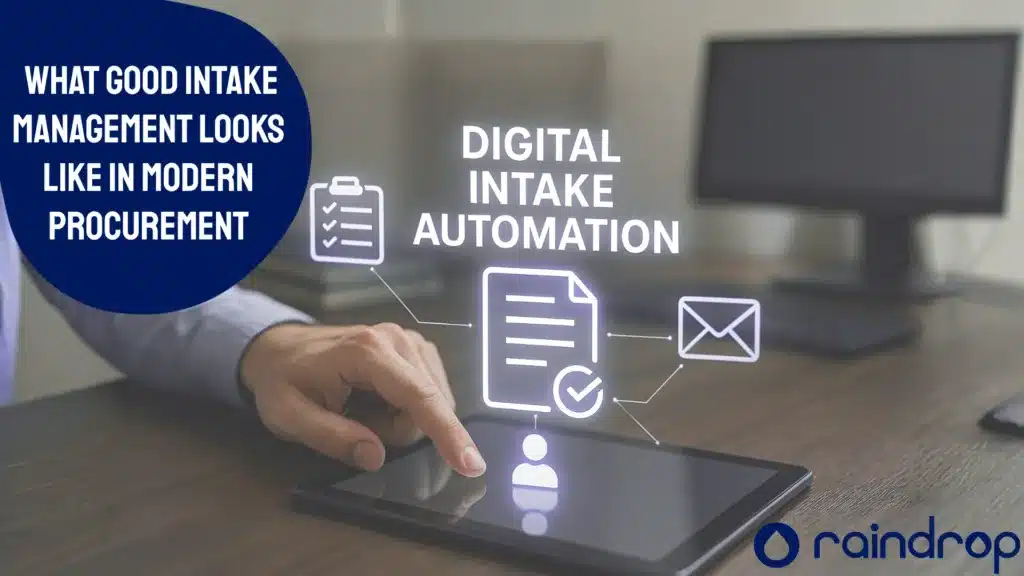
Intake management is the structured process of capturing, evaluating, and routing purchase requests before they move into supplier onboarding, sourcing, contracting, or purchasing workflows.
A modern Procurement intake system ensures:
- All requests enter through a centralized intake portal
- Required information is captured upfront
- Approval workflows are automated
- Requests are visible across Procurement and Finance
- Downstream source-to-pay systems receive accurate data
Rather than functioning as a static form, modern intake management acts as an intelligent orchestration layer. Raindrop Systems supports this approach by connecting request intake with automated routing, policy controls, and integration into broader Procurement workflows and even other systems.
Why Traditional Intake Processes Fail
Many organizations still rely on informal intake channels, such as:
- Email requests
- Disconnected chat messages
- Spreadsheets
- Manual approval chains
These processes often result in:
- Incomplete request data
- Delayed approvals
- Limited audit trails
- Unclear ownership
- Reduced spend visibility
Without structured intake management, Procurement teams operate reactively instead of strategically.
Raindrop Systems replaces scattered intake channels with a centralized, digital intake management workflow that enforces clarity and governance from the first touchpoint.
Core Elements of Good Intake Management
Good intake management in modern Procurement includes six essential characteristics:
1. Standardization
A centralized Procurement intake system uses standardized request forms tailored by category or request type. This ensures:
- Complete data capture
- Consistent categorization
- Fewer back-and-forth clarifications
Raindrop Systems enables structured yet dynamic intake templates that guide stakeholders through the right questions upfront, improving request quality without creating unnecessary complexity.
2. Automation
Procurement workflow automation is a core requirement. Good intake management:
- Routes requests automatically based on category, budget, or risk
- Triggers appropriate approval workflows
- Reduces manual intervention
Raindrop Systems routes every request automatically, moving teams from manual triage to policy-aligned decision flows without human intervention.
3. Visibility
Modern Procurement depends on real-time visibility. A strong intake management system provides:
- Status tracking for requesters
- Central dashboards for Procurement
- Spend visibility before commitments occur
Raindrop Systems’ intake dashboards give procurement, finance, and stakeholders real-time visibility into request status, including pipeline volume, approval timeline, and potential spend before sourcing begins.
4. Governance
Good intake management enforces Procurement governance without slowing business teams down. It ensures:
- Policy compliance
- Budget alignment
- Audit-ready documentation
- Controlled approvals
Raindrop Systems enforces governance controls that scale with enterprise requirements through structured intake and configurable workflows without sacrificing stakeholder usability.
5. Integration
Intake-to-procure must connect seamlessly to:
- Source-to-pay systems
- ERP platforms
- Contract lifecycle tools
- Vendor management workflows
Raindrop Systems integrates across the full Procurement technology stack through RainConnect, making intake the coordinated entry point into sourcing, contracting, and purchasing operations. A modern intake orchestration platform does not operate in isolation
6. Stakeholder Experience
Many vendor guides focus heavily on control. However, good intake management also prioritizes user experience.
Modern systems provide:
- Clear request pathways
- Transparent status updates
- Reduced confusion about “where to go”
- Faster cycle times
Raindrop Systems emphasizes structured intake without friction, helping Procurement teams improve stakeholder adoption while maintaining operational discipline.
Intake-to-Procure: Connecting Requests to Execution
Intake management is the first phase of the intake-to-procure process. A well-designed intake-to-procure workflow ensures that:
- Requests are categorized correctly
- Risk and compliance checks occur early
- Sourcing strategies are aligned
- Downstream Procurement activities are triggered efficiently
Without strong intake, the rest of the Procurement lifecycle inherits inefficiencies. Raindrop Systems functions as the centralized request management layer that connects intake directly to sourcing, contracting and purchasing execution.
Measuring Intake Performance
Modern Procurement teams treat intake management as a measurable capability. Common metrics include:
- Request cycle time
- Approval turnaround time
- Intake volume by category
- Spend under management
- Policy compliance rates
- Rework or resubmission frequency
Raindrop Systems captures structured intake data across the intake-to-procure lifestyle, giving Procurement leaders the reporting and performance analysis needed to evaluate and advance maturity.
How Modern Procurement Teams Improve Intake
Improving Procurement intake management requires:
- Moving from fragmented intake channels to centralized request intake
- Implementing structured intake process templates
- Automating routing and approvals
- Integrating intake with ERP and source-to-pay systems
- Elevating intake from administrative step to strategic control point
Raindrop Systems balances governance, automation, and stakeholder experience in a single intake orchestration platform, giving Procurement teams scalable, policy-aligned workflows without tradeoffs.
Conclusion
Good intake management in modern Procurement is structured, automated, visible, and integrated. It replaces informal request channels with a centralized Procurement intake system that supports governance, improves cycle times, and strengthens spend visibility.
While many organizations view intake as a form or administrative gate, modern Procurement leaders recognize it as a strategic capability. By implementing intelligent intake-to-procure workflows and leveraging orchestration solutions like Raindrop Systems, teams can transform intake from a bottleneck into a foundation for Procurement maturity and business agility.