Procurement in 2026: Why AI-First Is No Longer Optional
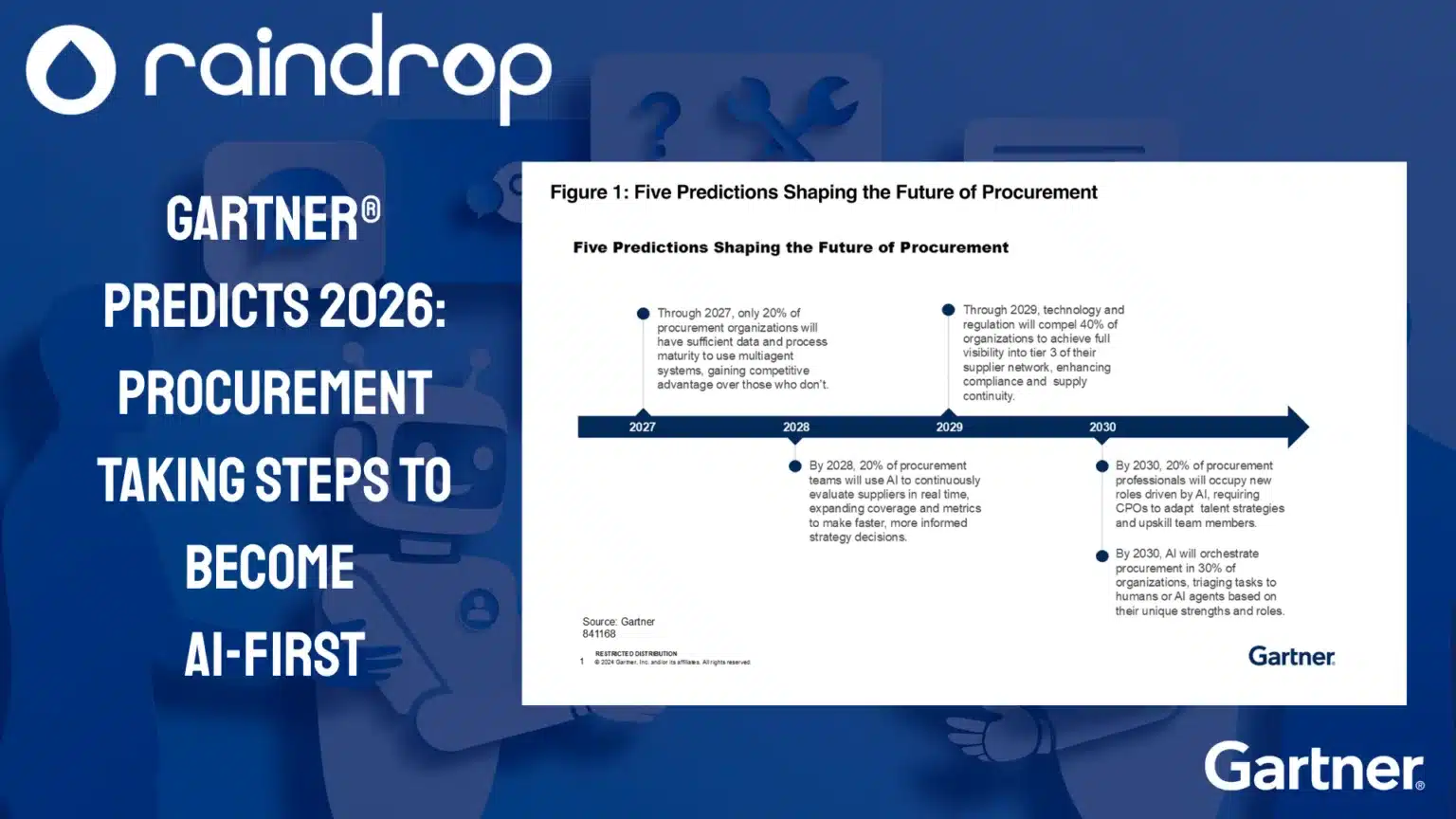
The world of procurement is changing, and not just incrementally. According to Gartner’s Predicts 2026: Procurement Taking Steps to Become AI-First, procurement organizations are entering a pivotal transition as AI capabilities reshape both how work gets done and what “strategic procurement” truly means. In this blog, we’ll explore the most important takeaways from Gartner’s research and what they mean for modern procurement leaders navigating digital transformation, especially as they look toward 2026 and beyond.
From Fragmented Processes to AI-Powered Workflows
Historically, procurement has struggled with disconnected processes and siloed systems. Too many tools. Too many handoffs. Too much manual work. This fragmentation limits visibility and keeps teams in reactive mode, chasing spend, chasing compliance, and chasing exceptions rather than driving value.
Gartner emphasizes that legacy processes and poor data quality continue to be major obstacles to procurement’s progress. Until organizations resolve these foundational issues, AI’s potential can’t be fully realized.
What this means in practice:
- AI agents can’t deliver reliable insights without clean, trustworthy data
- Teams must break down silos and create end-to-end process visibility
- Shared data and workflows are now table stakes, not optional
This thinking aligns with why we emphasize foundational capabilities in our own guidance on executive transitions. In our blog, 7 Things I’d Tell a New CPO Stepping into 2026, we discuss that building reliable data, governance, and unified workflows is essential before any AI transformation can deliver on its promise.
Regulatory and Technological Forces Are Forcing Change
It isn’t just technology driving AI adoption; it’s also regulation and compliance demands. Gartner identifies a convergence between regulation and technology that’s pushing organizations to invest in multi-tier supplier transparency and real-time risk management, no longer nice-to-have but table stakes for visibility and resilience.
In an era marked by evolving sustainability standards, global supply chain risk, and multi-jurisdiction compliance, procurement no longer has the luxury of working in a vacuum. Procurement teams must:
- Know what their suppliers are doing, beyond Tier 1
- Monitor risk and compliance continuously, not retrospectively
- Build frameworks that scale with enterprise complexity
This isn’t fear-driven, it’s reality-driven. Procurement leaders can either anticipate these requirements or be forced to react after a disruption occurs.
A New Operating Model: AI-Native and Hybrid Teams
Perhaps the most disruptive insight from Gartner is the prediction that AI-native transformation will fundamentally redefine procurement talent and organizational structure, not as a replacement, but as a partner to human insight and decision-making.
Rather than simply automating tasks, AI is positioned to:
- Automate routine workflows
- Drive hybrid models where humans and AI collaborate
- Elevate teams to higher-value, strategic work
This shift is already starting to take shape among leading procurement teams. In our blog, 7 Procurement Moves That Will Separate Leaders from Laggards in 2026, we explore how the organizations pulling ahead are those treating AI not as an add-on, but as a core enabler of faster decisions, shared insight, and sustained competitive performance.
Rather than AI replacing people, Gartner frames the shift as one where AI augments human capability, making procurement practitioners more effective, not obsolete.
What This Means for CPOs Today
If there’s one clear message from Gartner, it’s that procurement is no longer just about cost containment and compliance; it’s about value creation, business alignment, and responsiveness.
Here’s what leaders should be thinking about now:
- Invest in reliable data pipelines, not isolated point solutions
- Focus on process orchestration, not just automation
- Build capabilities that position procurement as a driver of enterprise agility
- Prepare teams for AI-enabled roles and hybrid workflows
Organizations that build these foundations now will be the ones Gartner describes as AI-First Leaders, the ones with enduring competitive advantage.
Raindrop’s Perspective: AI-Native by Design
At Raindrop, we believe this shift toward AI-First procurement is more than a prediction; it’s already underway. Gartner’s research echoes what we see from procurement leaders facing real challenges today: fragmented systems, delayed decisions, and underutilized data.
That’s why Raindrop is built as an AI-native platform, not as an afterthought or bolt-on feature. Our approach delivers connected workflows, real-time visibility, and actionable intelligence across Source-to-Pay.
Whether you’re grappling with data quality issues, trying to accelerate contract execution, or leading your organization into a more strategic future, the key insight from Gartner is clear:
AI isn’t just another tool; it’s a foundational force reshaping procurement’s role and impact.
Ready to Lead in 2026?
Download the full Gartner report to understand the five predictions in detail and how your organization can lead the transition to an AI-First procurement model.
Read the Gartner® report: Predicts 2026: Procurement Taking Steps to Become AI-First.