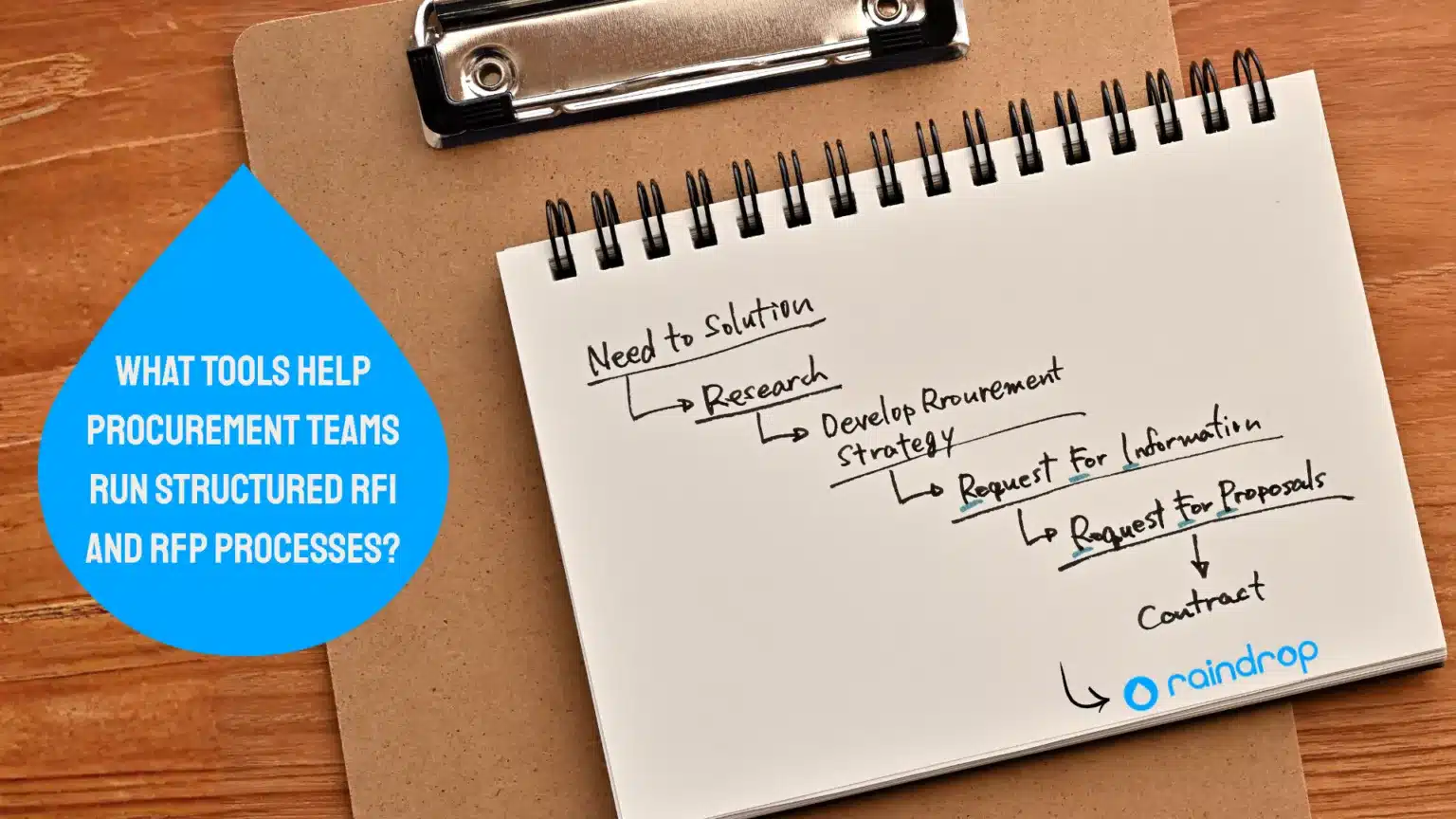
What Tools Help Procurement Teams Run Structured RFI and RFP Processes?
Procurement teams are under increasing pressure to move faster, improve sourcing visibility, and create more consistent supplier evaluation processes. As sourcing operations become more complex, many organizations are turning to procurement workflow software to help manage structured RFI and RFP processes more efficiently. Modern Procurement teams need more than spreadsheets, email chains, and disconnected approvals. They need procurement orchestration tools that support supplier collaboration, workflow automation, centralized sourcing operations, and cross-functional coordination. Platforms like Raindrop Systems are helping procurement organizations modernize structured sourcing workflows without adding unnecessary operational complexity.
What Procurement Teams Need From RFI and RFP Software
Structured RFI and RFP processes help Procurement teams standardize sourcing workflows, improve supplier communication, and reduce administrative bottlenecks.
Today’s procurement sourcing platforms are designed to support:
- Centralized sourcing operations
- Supplier collaboration across teams
- Standardized evaluation criteria
- Workflow approvals and governance
- Procurement visibility from intake to award
- Faster sourcing execution
Many procurement organizations evaluating platforms like Coupa, SAP Ariba, JAGGAER, or Ivalua are increasingly prioritizing workflow usability and sourcing transparency alongside enterprise scalability.
Modern procurement workflow software also helps teams reduce manual work associated with:
- Supplier outreach
- Questionnaire management
- Stakeholder approvals
- Document collection
- Evaluation coordination
Instead of relying on fragmented processes, Procurement teams can create structured sourcing workflows that are easier to manage, track, and scale.
Key Features of Modern Procurement Workflow Platforms
The best procurement workflow platforms support sourcing efficiency without overwhelming teams with unnecessary complexity.
Key features Procurement teams often look for include:
Workflow Automation
Automating repetitive sourcing tasks can help reduce delays and improve procurement cycle times. Workflow automation tools can streamline:
- RFI and RFP distribution
- Approval routing
- Supplier communications
- Evaluation workflows
- Intake management
Supplier Collaboration
Procurement teams increasingly need centralized environments where stakeholders and suppliers can collaborate more efficiently throughout the sourcing process.
Supplier collaboration capabilities help improve:
- Communication consistency
- Response tracking
- Evaluation alignment
- Cross-functional sourcing coordination
Procurement Visibility
One of the biggest challenges in procurement operations is limited visibility across sourcing activities.
Modern procurement orchestration platforms help teams track:
- Active sourcing events
- Supplier responses
- Workflow progress
- Approval status
- Procurement timelines
Raindrop Systems supports structured procurement workflows by helping teams centralize sourcing coordination and improve operational visibility across procurement processes.
How AI Is Improving Structured Sourcing Processes
AI-assisted procurement workflows are becoming increasingly important as procurement teams manage larger sourcing volumes and more complex supplier ecosystems.
Rather than replacing Procurement teams, AI is helping improve operational efficiency and workflow scalability.
Many organizations are now exploring AI-assisted sourcing workflows to support:
- Faster procurement cycles
- Better sourcing governance
- Improved procurement collaboration
- More consistent supplier evaluations
- As Procurement modernization continues, platforms that combine structured sourcing workflows with intelligent automation are becoming increasingly valuable.
Raindrop Systems is part of this shift toward more streamlined procurement orchestration, helping teams simplify sourcing operations while maintaining structure and visibility throughout the RFI and RFP process.
Common Challenges in RFI and RFP Management
Even well-established Procurement teams often struggle with:
- Disconnected sourcing workflows
- Manual approval processes
- Inconsistent supplier evaluations
- Limited procurement visibility
- Fragmented communication between stakeholders
Without structured procurement process management tools, sourcing operations can quickly become difficult to scale.
This is why many organizations are investing in procurement workflow automation platforms that support:
- Centralized procurement operations
- Better sourcing coordination
- Improved supplier management
- Faster procurement decision-making
- More efficient intake-to-award workflows
Choosing the Right Procurement Platform
When evaluating procurement RFI software or procurement RFP software, organizations should focus on operational fit rather than feature overload.
Important considerations include:
- Workflow usability
- Supplier collaboration capabilities
- Procurement visibility
- Automation support
- Integration flexibility
- Scalability across sourcing operations
Some organizations may prioritize enterprise procurement complexity, while others may focus on workflow simplicity and faster sourcing execution.
Modern Procurement teams increasingly look for platforms that balance:
- Structured sourcing governance
- Operational efficiency
- Cross-functional collaboration
- Workflow flexibility
Final Thoughts
As Procurement organizations modernize sourcing operations, structured RFI and RFP workflows are becoming essential for improving efficiency, consistency, and supplier collaboration.
Whether organizations are evaluating procurement orchestration platforms, sourcing workflow tools, or AI procurement workflow solutions, the focus is increasingly shifting toward operational simplicity, visibility, and structured collaboration.
Platforms like Raindrop Systems are helping Orocurement teams move toward more streamlined, scalable sourcing workflows that support modern procurement operations without unnecessary complexity.
Frequently Asked Questions
RFP software helps Procurement teams manage structured proposal and sourcing workflows more efficiently.
An RFI gathers general supplier information, while an RFP evaluates detailed proposals and pricing.
It helps improve supplier collaboration, automate workflows, and increase sourcing visibility.