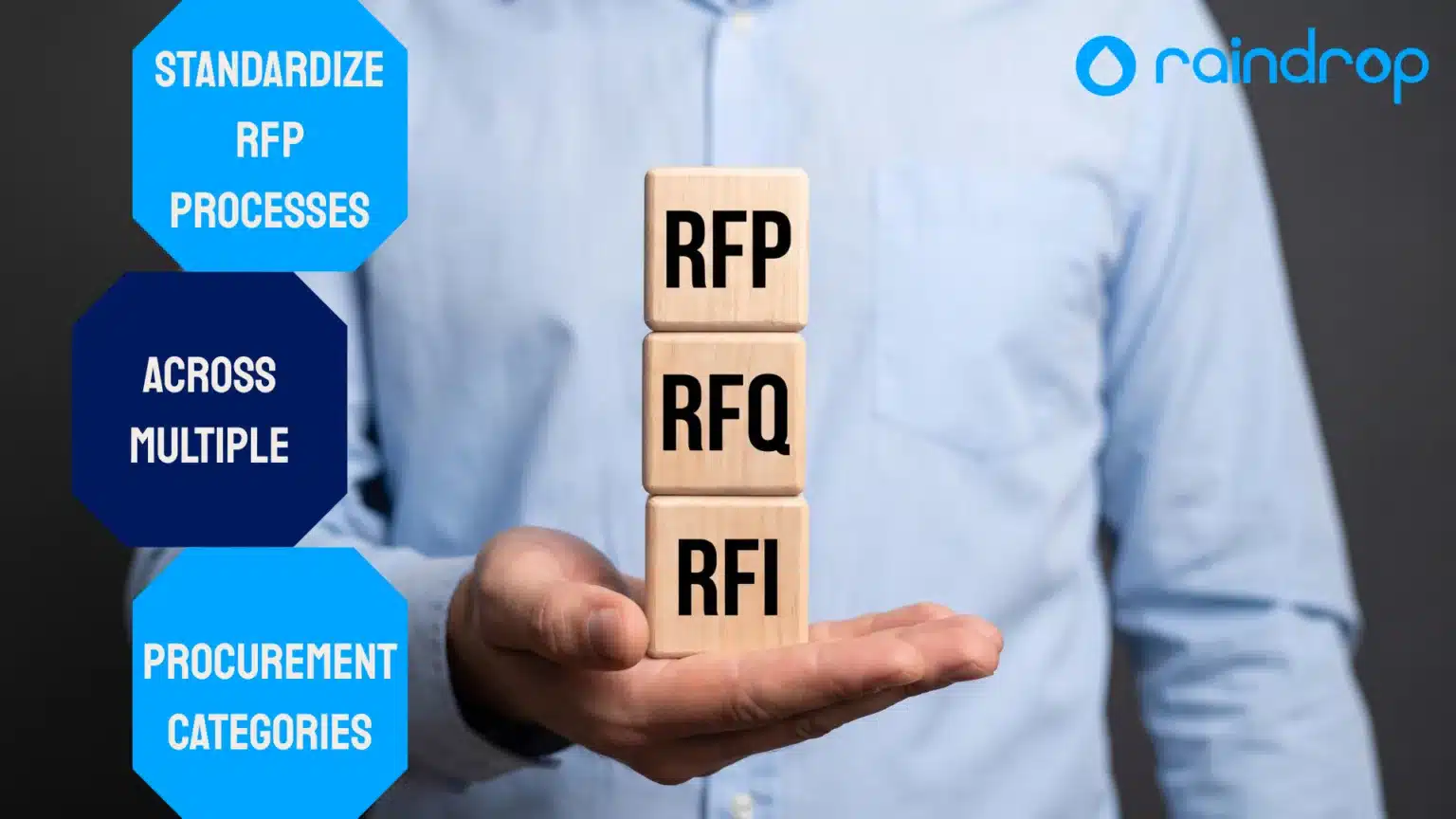
How to Standardize RFP Processes Across Procurement Categories
Managing Requests for Proposal (RFPs) across multiple procurement categories can quickly become complex. Different business units often use different templates, evaluation criteria, approval workflows, and documentation standards, making it difficult to maintain consistency across the procurement process. Organizations looking to standardize procurement while improving efficiency are increasingly turning to AI-powered platforms like Raindrop Systems to create repeatable, scalable RFP workflows. By combining standardized processes with intelligent automation, procurement teams can reduce manual work, strengthen governance, and create a better experience for both internal stakeholders and suppliers. Whether you're sourcing software, professional services, manufacturing equipment, or indirect spend, a standardized RFP process provides the flexibility to meet category-specific requirements without reinventing the process every time.
Why Standardizing Your RFP Process Matters
A standardized RFP process helps Procurement teams create consistency across every stage of the sourcing lifecycle. Instead of relying on disconnected templates or inconsistent evaluation methods, organizations can establish a repeatable framework that improves collaboration, transparency, and decision-making.
Some of the key benefits include:
- Greater consistency across Procurement teams
- Reduced manual effort and duplicate work
- Improved governance and compliance
- More transparent supplier evaluations
- Faster procurement timelines
- Better collaboration between stakeholders and suppliers
Ultimately, standardization allows Procurement teams to spend less time managing administrative tasks and more time making strategic sourcing decisions.
Build a Standardized RFP Framework
Every successful procurement process starts with a consistent foundation.
Begin by creating a standardized RFP template that includes core sections such as business objectives, project scope, supplier requirements, submission guidelines, timelines, evaluation criteria, and legal terms. Establishing common documentation standards ensures every procurement event follows the same structure while allowing teams to work more efficiently.
Organizations should also develop reusable question libraries, standardized approval workflows, and documented procurement policies to support consistency across departments.
With Raindrop Systems, Procurement teams can centralize templates, organize procurement knowledge, and create repeatable workflows that help maintain consistency across every procurement category.
Balance Standardization with Flexibility
While consistency is essential, every procurement category has unique requirements.
The goal isn’t to create identical RFPs—it’s to build a standardized framework that can easily be customized when necessary. A strong approach is to maintain a core template while allowing category-specific sections for technical requirements, compliance needs, pricing structures, or specialized supplier questions.
This modular approach enables organizations to preserve governance while giving procurement teams the flexibility to address the unique needs of each sourcing initiative.
By balancing consistency with adaptability, organizations can improve procurement efficiency without limiting business requirements.
Standardize Supplier Evaluation
Creating a consistent supplier evaluation process is just as important as standardizing the RFP itself.
Establishing common evaluation criteria helps reduce subjectivity and ensures every supplier is assessed fairly across procurement categories. Procurement teams should define weighted scoring methodologies, standardized evaluation scorecards, and cross-functional review processes before proposals are received.
Consistent evaluation frameworks improve transparency, simplify decision-making, and help organizations identify the supplier that best aligns with business objectives.
Strengthen Governance and Compliance
As procurement programs scale, governance becomes increasingly important.
Organizations should implement version control, documented approval workflows, audit trails, and standardized documentation requirements to ensure every RFP follows established procurement policies.
Regularly reviewing templates, procurement processes, and governance standards also helps organizations remain compliant while continuously improving procurement performance.
Strong governance not only reduces risk but also builds confidence in procurement decisions across the organization.
Scale Your RFP Process with AI
Managing dozens—or even hundreds—of RFPs across multiple procurement categories can become difficult without the right technology.
AI can help Procurement teams automate repetitive tasks, reuse organizational knowledge, recommend relevant content for future RFPs, and streamline document creation. Instead of searching through previous files or recreating templates from scratch, procurement professionals can quickly generate consistent, high-quality RFPs using centralized information.
Raindrop Systems helps Procurement teams standardize RFP creation by combining AI-powered automation with centralized knowledge management. This allows organizations to create more consistent procurement processes, accelerate supplier engagement, reduce administrative effort, and maintain governance across every stage of the procurement lifecycle.
Best Practices for Long-Term Success
Standardizing your RFP process is an ongoing initiative rather than a one-time project.
To build a scalable procurement process:
- Maintain centralized RFP templates and question libraries.
- Review and update procurement documentation regularly.
- Establish consistent supplier evaluation criteria.
- Gather feedback from Procurement teams and business stakeholders.
- Monitor procurement performance and identify areas for improvement.
- Continuously refine workflows as business needs evolve.
Organizations that invest in continuous improvement are better positioned to create procurement processes that remain efficient, consistent, and scalable over time.
Standardize Procurement with Confidence
A standardized RFP process helps organizations improve consistency, strengthen governance, and create better experiences for both procurement teams and suppliers. By combining repeatable frameworks with intelligent automation, organizations can reduce complexity while making procurement more efficient and scalable.
Whether you’re building your first standardized procurement framework or optimizing an enterprise sourcing strategy, Raindrop Systems helps organizations streamline RFP creation, centralize procurement knowledge, improve supplier collaboration, and scale procurement processes with AI. The result is a more consistent, efficient procurement process that enables teams to make smarter sourcing decisions with confidence.
FAQ
A standardized RFP process uses consistent templates, workflows, evaluation criteria, approval procedures, and documentation across procurement activities. Standardization improves efficiency while allowing procurement teams to customize requirements for different purchasing categories when necessary.
Standardizing RFPs help organizations improve governance, reduce administrative work, create more consistent supplier evaluations, accelerate sourcing timelines, and provide better experience for internal stakeholders and suppliers.
Yes. Most organizations use a standardized core RFP template with category-specific sections for technical requirements, compliance obligations, pricing models, supplier qualifications, or industry-specific questions. This approach balances consistency with flexibility