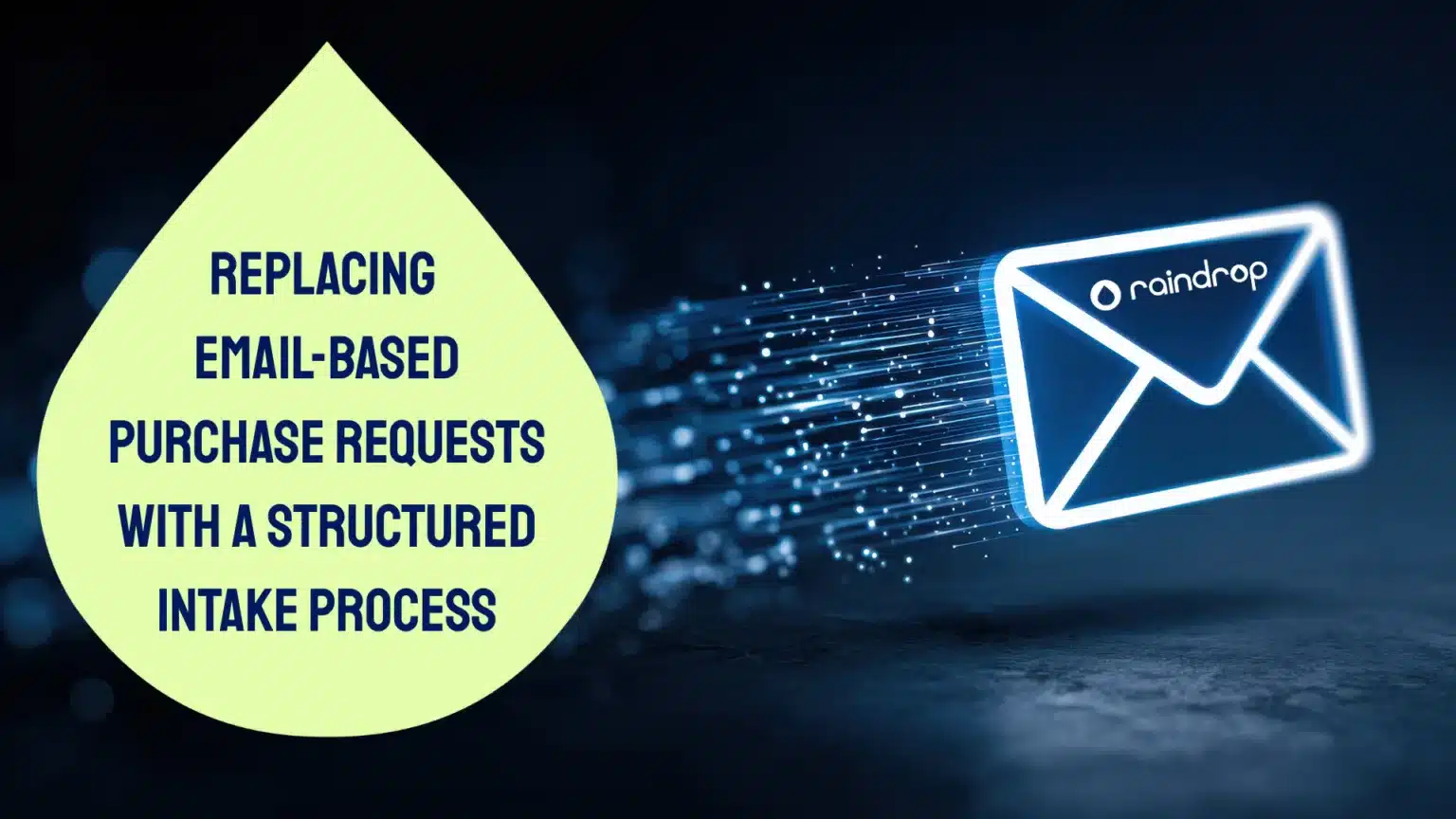
How to Replace Email-Based Purchase Requests with a Structured Intake Process
Email has long been the default way for employees to submit purchase requests, but as organizations grow, it often creates more challenges than efficiencies. Requests can be buried in inboxes, key information may be missing, and approvals become difficult to track, resulting in delays and inconsistent purchasing processes. A structured procurement intake process provides a better alternative. By replacing fragmented email requests with standardized workflows, procurement teams can improve visibility, enforce purchasing policies, and ensure every request follows the appropriate approval path. Instead of reacting to incomplete emails, procurement can focus on helping the business make informed purchasing decisions.
Why Email-Based Purchase Requests Create Bottlenecks
While email may work for occasional purchases, it becomes increasingly difficult to manage at scale. Common challenges include:
- Missing information: Employees often forget to include budgets, business justifications, timelines, or supplier details.
- Approval delays: Requests are manually forwarded between stakeholders, creating unnecessary bottlenecks.
- Limited visibility: Procurement teams have no centralized view of incoming requests or purchasing demand.
- Inconsistent processes: Different departments submit requests in different formats, making reviews more time-consuming.
- Compliance risks: Required approvals, policy checks, or documentation can easily be overlooked.
- Poor reporting: Email provides little insight into request volumes, approval times, or process performance.
These challenges slow Procurement teams down and make it more difficult to maintain consistent purchasing governance across the organization.
What Is a Structured Procurement Intake Process?
A structured procurement intake process is a standardized way for employees to submit purchasing requests through a centralized workflow instead of email. Rather than relying on free-form messages, employees complete a guided request that captures the information procurement needs from the start.
A structured intake process typically includes:
- Standardized purchase request forms
- Required business and purchasing information
- Estimated spend and budget details
- Supplier information (when applicable)
- Automated approval routing
- Centralized request tracking
- Audit trails and documentation
- Integration with procurement, finance, ERP, and supplier management systems
- This creates a consistent starting point for every purchase request while reducing manual follow-up.
Key Components of a Structured Purchase Request Workflow
A successful procurement intake process should include several core capabilities that improve efficiency, visibility, and governance.
Standardized Request Forms. Capture consistent information from the start, including:
- Business justification
- Estimated spend
- Department or cost center
- Required timeline
- Supplier information
- Supporting documentation
Automated Approval Routing. Route requests automatically based on predefined rules, such as:
- Spend thresholds
- Purchasing category
- Department or business unit
- Internal approval policies
- Risk or compliance requirements
Centralized Visibility. Give procurement and business teams one place to:
- Track request status
- Monitor incoming purchasing demand
- View approval progress
- Prioritize purchasing activities
Policy Enforcement. Build governance directly into the workflow by:
- Requiring mandatory approvals
- Standardizing documentation
- Applying purchasing policies consistently
- Creating complete audit trails
Reporting & Analytics. Use centralized data to measure and improve procurement performance, including:
- Request volume
- Approval turnaround times
- Process bottlenecks
- Policy compliance
- Purchasing trends
Benefits of Structured Procurement Intake
Replacing email with structured procurement intake helps organizations build a more efficient purchasing process.
Key benefits include:
- Faster purchase request approvals
- Improved procurement visibility
- Better collaboration across procurement, finance, and business teams
- Consistent policy enforcement
- Reduced manual administrative work
- Easier supplier management
- More accurate reporting and analytics
- A better employee experience
- Greater scalability as purchasing volumes grow
Together, these improvements allow procurement teams to spend less time managing emails and more time supporting strategic purchasing decisions.
Best Practices for Implementing Procurement Intake
To successfully transition away from email-based purchasing requests:
- Standardize request templates so employees submit consistent information.
- Capture required information upfront to reduce follow-up questions.
- Automate approval routing using business rules such as spend, category, or department.
- Integrate procurement with finance and ERP systems to reduce duplicate work.
- Monitor key metrics such as request volume, approval times, and policy compliance to identify opportunities for improvement.
A phased rollout with clear communication and employee training can also help drive adoption.
How Raindrop Systems Supports Structured Procurement Intake
Raindrop Systems helps organizations replace fragmented email requests with a centralized procurement intake experience. Employees can submit requests through configurable workflows that capture the right information from the beginning, while automated routing ensures requests reach the appropriate stakeholders based on internal policies.
By connecting procurement intake with approvals, supplier management, sourcing, and downstream procurement processes, Raindrop Systems helps teams improve visibility without adding unnecessary complexity. The result is a more consistent purchasing experience for employees and a more efficient workflow for Procurement and Finance teams.
Conclusion
Replacing email-based purchase requests with a structured procurement intake process helps organizations create a more efficient, transparent, and scalable purchasing experience.
By standardizing requests, automating approvals, and centralizing procurement workflows, organizations can reduce delays, improve governance, and gain greater visibility into purchasing activity. As Procurement continues to evolve, structured intake provides the foundation for better collaboration, stronger compliance, and more informed purchasing decisions.
FAQ
Start by implementing a centralized procurement intake process with standardized request forms, automated approval routing, and clear purchasing workflows. This ensures every request follows a consistent process from submission through approval.
A procurement intake process is a structured way for employees to submit purchasing requests. It standardizes request information, routes approvals automatically, and provides procurement teams with greater visibility into purchasing activity.
Most purchase requests should include the product or service needed, business justification, estimated spend, required timeline, department, budget or cost center, supplier information if available, and any supporting documentation.