Why Most Procurement AI Strategies Stall Before They Start
AI is everywhere in Procurement right now. Every platform has it. Every supplier is leading with it. Yet, most Procurement leaders will tell you the same thing: the ROI isn't materializing the way they expected. Gartner's latest research confirms it. Only 11% of Procurement leaders are completely satisfied with the ROI of their AI-based automation initiatives. That's not a technology problem. That's a strategy problem.
The Real Issue: Skipping the Foundation
Most procurement AI adoption follows the same pattern. A team identifies a pain point, finds a tool that addresses it, runs a pilot, and moves on. The result is a patchwork of disconnected AI investments, each solving a narrow problem, none delivering at scale.
Gartner calls this “fragmented adoption”, and it’s the primary reason AI fails to deliver consistent value. When AI is bolted onto existing workflows rather than integrated into them, usage becomes inconsistent, ROI stays unpredictable, and the gap between AI’s potential and its actual impact remains wide open.
The fix isn’t more tools. It’s a smarter starting point.
Strategy Before Execution
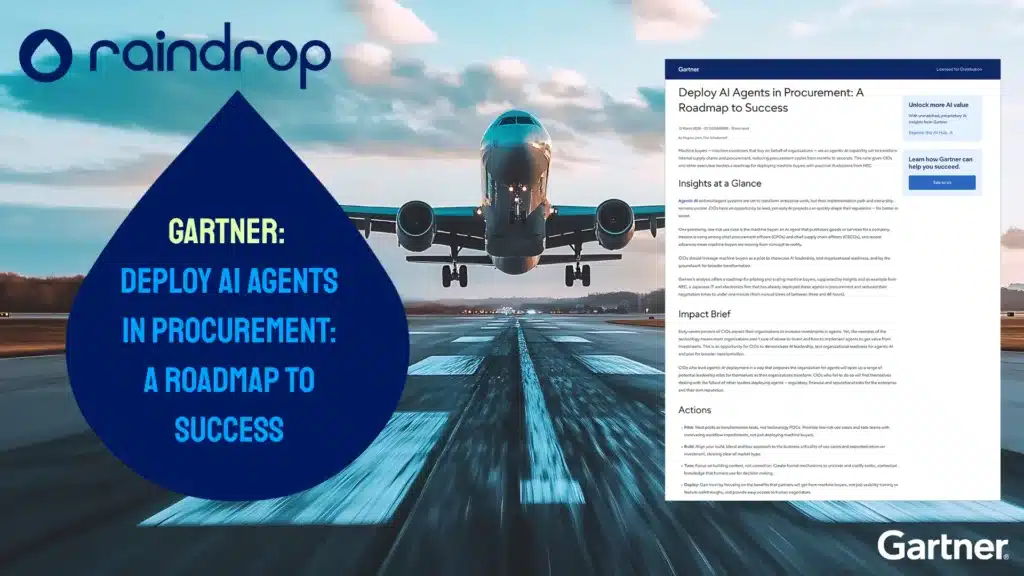
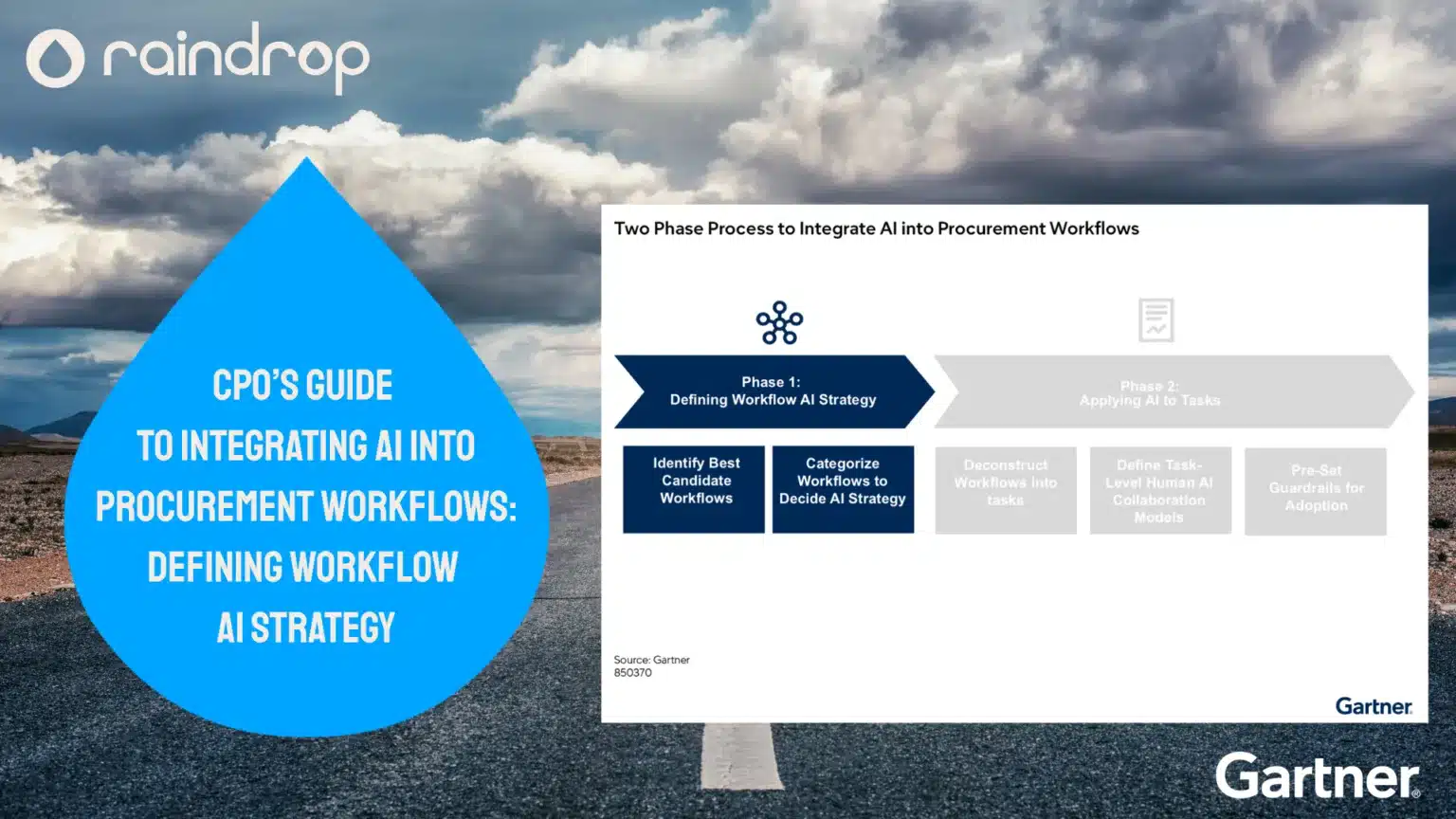
In Gartner’s recent research note, they outline a two-phase process for CPOs looking to integrate AI into procurement workflows. Phase one is entirely about strategy, before a single tool is selected or workflow is modified.
That means starting with outcomes, not technology. Instead of asking “how do we add AI to this workflow?”, Gartner recommends starting with “what measurable business outcome do we want to improve?” From there, Procurement leaders can identify candidate workflows, assess their viability for AI integration, and classify each one to determine the right approach.
That classification matters more than most teams realize. Not every workflow should be automated. A highly formalized, low-discretion process, like purchase order routing or NDA generation, is a strong candidate for full automation. A more judgment-intensive workflow like strategic sourcing or supplier negotiations, calls for augmentation, where AI supports the human rather than replacing the decision.
Applying AI uniformly across both creates inefficiency, not efficiency.
Raindrop’s Point of View
This is the architecture Raindrop was built around.
Rain, Raindrop’s embedded agentic AI, doesn’t sit outside your Procurement workflows waiting to be consulted. It operates inside them across sourcing, contracts, supplier management, intake, e-Procurement, AP automation, and spend analytics, acting where the work actually happens.
For high-formalization workflows, Rain automates. For complex, judgment-heavy processes, Rain augments surfacing risk, drafting language, flagging anomalies, and recommending next steps while keeping your team in control of the final call.
The result is AI adoption that maps directly to business outcomes. Shorter sourcing cycles. Faster contract turnaround. Spend visibility that Finance can act on. Not because AI was added to the process, but because it was built into it.
The Right Time to Get It Right
Gartner projects that by 2030, AI will orchestrate Procurement in 30% of organizations. The teams that get there won’t be the ones that moved fastest. They’ll be the ones who started with the right strategy.
That starts with understanding which workflows are ready, what outcomes you’re targeting, and how AI should operate in each context before implementation begins.
This Gartner research is something every CPO navigating this decision should have access to. Download the complimentary reprint to see the full methodology.