Intake and Orchestration, Reimagined by Agentic AI
For the last several years, Procurement teams have been told the same story: fix your intake, and you fix your chaos. Build a digital front door. Route requests automatically. Replace the Slack messages, the email threads, and the spreadsheet nobody updates with a single, structured system. That story was right. It's also already out of date.
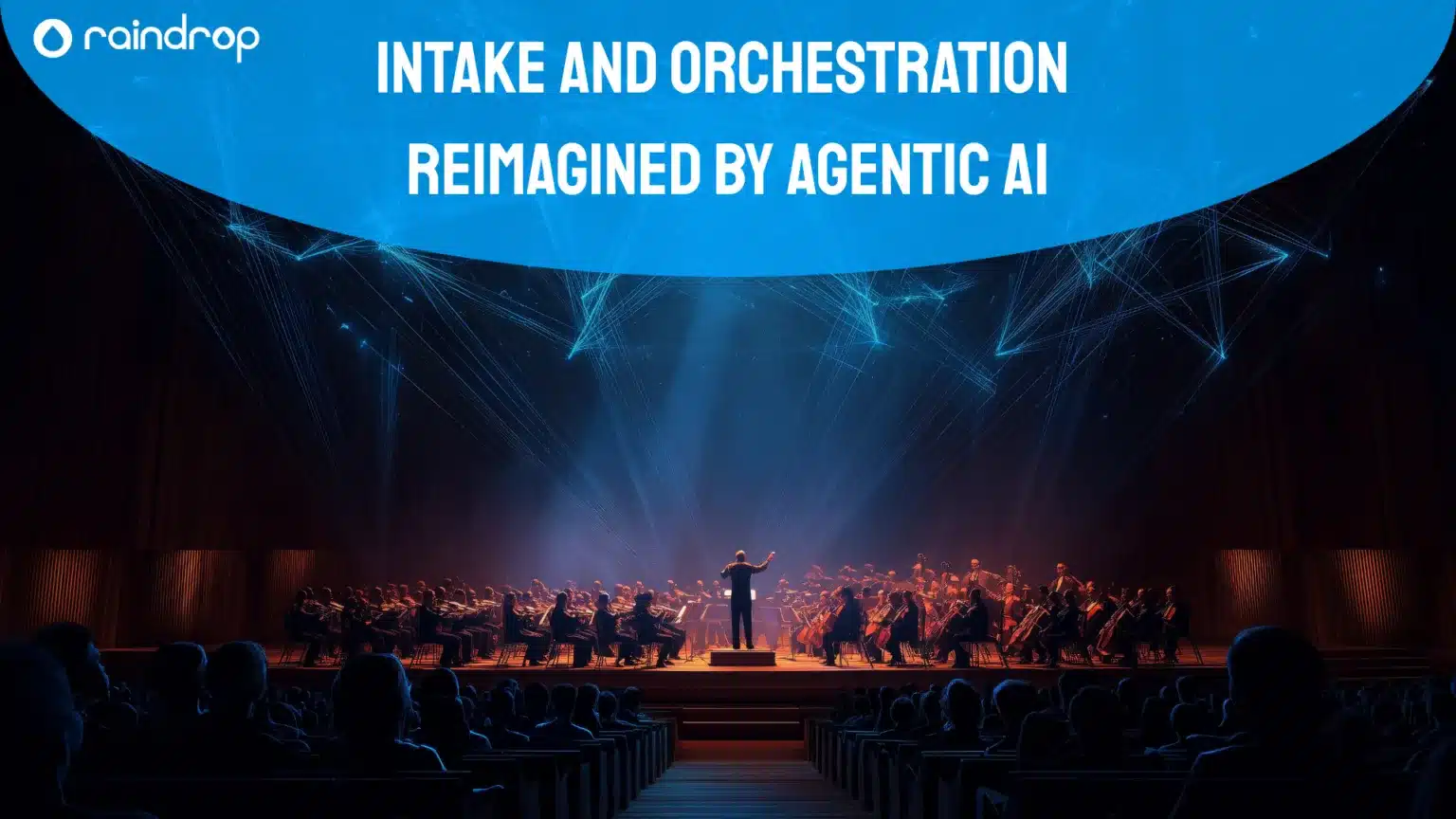
The problem was never "no intake system." It was "static intake systems."
Most I&O tools on the market today, even good ones, work the same basic way. A form captures a request. Rules-based logic routes it based on category, value, or department. Approvers get notified. It’s faster than email, but it’s still fundamentally reactive: built to handle the request pattern you defined when you set it up, not the one you’ll actually get six months from now.
That’s the version of I&O that’s becoming obsolete. Not the concept, the architecture behind it.
Agentic AI doesn't route requests. It understands them.
The shift isn’t from “no system” to “a system.” It’s from a system that follows rules to one that reasons.
An agentic I&O layer doesn’t just ask “what category does this fall into?” It asks what the request actually is, who’s making it, what similar requests have looked like before, what risk factors are present, and what should happen next, then acts on the answer. Instead of a form plus a rules engine, you get something closer to a procurement analyst who never sleeps: capturing the request, analyzing it in context, and initiating the right workflow without a human having to pre-define every branch of the decision tree.
That’s a meaningfully different capability than “intake with better routing.”
The real shift: from a separate step to a built-in one
Here’s where it gets interesting. Traditional I&O exists as a distinct category because procurement platforms needed a dedicated layer to catch requests before they hit sourcing, contracts, or AP. It was a translation function, converting messy human input into structured system input.
Agentic AI removes the need for that translation layer to be separate at all. When AI is embedded across the full Source-to-Pay lifecycle, rather than bolted onto the front of it, intake stops being a discrete step and starts being the natural first move of a single, continuous process. A request doesn’t get captured, then handed off to orchestration, then handed off again to sourcing or contracts. It gets understood once, by the same intelligence layer that’s already operating across suppliers, contracts, and spend, and the right workflow simply starts.
In other words: I&O isn’t disappearing because it stopped mattering. It’s disappearing because it’s no longer a separate problem to solve. It’s what happens automatically when AI is foundational to the platform instead of a feature added on top of it.
Why this matters right now
Most Procurement organizations are still buying I&O as if it’s 2023: a point solution, or a module bolted onto a legacy suite, meant to catch what would otherwise fall through the cracks. That approach made sense when the alternative was nothing. It makes less sense when agentic AI can do a job better, without needing to exist as a separate system at all.
The organizations that will struggle aren’t the ones without an I&O tool. They’re the ones who invested heavily in static intake automation and now have to ask whether that investment can evolve, or whether it’s already behind.
Where this leaves Procurement teams
The old advice still holds directionally: fix your front door, but the bar for what “fixed” means has moved. A single structured intake point was the right answer to 2023’s problem. Embedded, reasoning-capable AI that makes intake a byproduct of a unified platform, rather than a separate stop along the way, is the right answer now.
I&O isn’t obsolete as an idea. The version of it that lives in its own tool, running on static rules, separate from the rest of the procurement lifecycle, is.
Where Raindrop Comes In
Raindrop was built for exactly this shift. Instead of treating intake as a separate tool bolted onto the front of your procurement stack, Raindrop’s Intake & Orchestration is embedded directly into a unified Source-to-Pay platform, so a request isn’t captured, handed off, and handed off again. It’s understood once, by Rain, Raindrop’s agentic AI, and routed instantly into sourcing, contracts, supplier management, or AP, whichever workflow the request actually calls for. There’s no separate rules engine to configure and maintain, because the same intelligence layer that understands your suppliers, contracts, and spend is the one reading the request in the first place. That’s the difference between an I&O tool you have to manage and an I&O capability that simply works in the background, doing what a whole category of point solutions used to require a dedicated system to do. To learn more about Raindrop’s approach to Intake and Orchestration, reach out today!